

Identity theft is becoming one of the fastest-growing cybercrimes in today’s digital world. Criminals steal personal information such as your Aadhaar number, PAN card details, bank account information, passwords, or credit card details to commit fraud. These crimes can lead to financial losses, damaged credit scores, and legal complications.
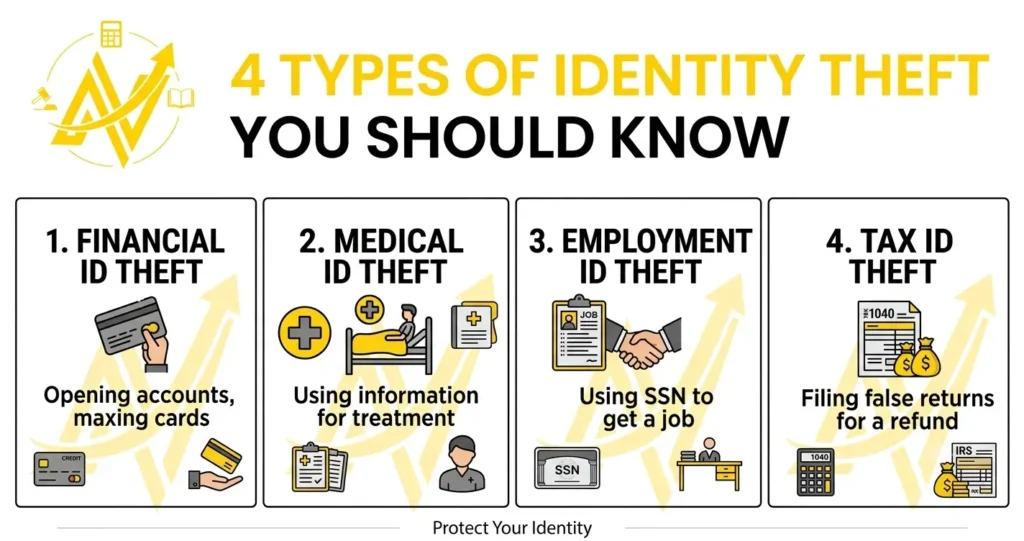
Understanding the 4 types of identity theft can help you recognise warning signs and take quick action before the damage becomes serious. In this guide, we’ll explain what identity theft is, discuss common identity theft cases, and share practical tips to protect yourself. At Nimble Trio, we help individuals understand their legal rights and guide them through cyber fraud and identity theft matters.
What Is Identity Theft?
Identity theft is a crime where someone steals your personal information without your permission and uses it for illegal purposes. This information may include:
- Aadhaar number
- PAN card
- Passport details
- Bank account information
- Credit or debit card details
- Email credentials
- Mobile number
- Social media accounts
Once criminals gain access to this information, they may open bank accounts, apply for loans, make online purchases, or impersonate you online.
Identity theft affects individuals, businesses, and even government organisations. As more services become digital, protecting personal information has become increasingly important.
4 Types of Identity Theft You Should Know
1. Financial Identity Theft
Financial identity theft is the most common form of identity theft.
Here, criminals steal banking or credit card information to:
- Make unauthorised purchases
- Withdraw money
- Apply for loans
- Open new credit cards
- Conduct online transactions
Victims often discover the fraud only after receiving unexpected bank alerts or loan notices.
Example
Someone obtains your credit card details through a phishing email and spends money using your account.
2. Medical Identity Theft
Medical identity theft happens when someone uses another person’s identity to receive medical treatment, purchase medicines, or claim insurance benefits.
This can result in:
- Incorrect medical records
- Insurance claim issues
- Higher insurance premiums
- Delays in receiving treatment
Medical identity theft is less common but can create long-term complications.
3. Criminal Identity Theft
Criminal identity theft occurs when a person arrested for a crime provides someone else’s identity to law enforcement.
As a result, the innocent victim may:
- Receive court notices
- Face police enquiries
- Experience difficulties during background verification
- Encounter legal complications
Resolving criminal identity theft usually requires legal documentation and professional legal assistance.
4. Online Identity Theft
Online identity theft involves stealing personal information from digital platforms.
Cybercriminals may hack:
- Email accounts
- Social media accounts
- Digital wallets
- Online banking
- Shopping accounts
They often use phishing emails, fake websites, malware, or leaked passwords to gain access.
Using strong passwords and enabling two-factor authentication can significantly reduce this risk.
Common Identity Theft Cases
Many identity theft cases begin with a simple mistake, such as clicking an unknown link or sharing personal information online.
Some common identity theft cases include:
- Fake loan applications using stolen Aadhaar details
- Credit card fraud
- Social media account hacking
- SIM swap fraud
- Fake online shopping accounts
- Bank account takeover
- Email account compromise
- Tax-related identity fraud
Reporting these incidents immediately can help reduce financial and legal damage.
Warning Signs of Identity Theft
Recognising identity theft early can minimise losses.
Watch for these warning signs:
- Unauthorised bank transactions
- Loan approvals you never requested
- Unknown credit card charges
- Missing emails
- Password changes you didn’t make
- Unexpected OTP messages
- Calls regarding unknown debts
- New accounts opened in your name
If you notice any of these signs, act immediately.
How to Protect Yourself from Identity Theft
Preventing identity theft requires good digital habits.
Follow these simple tips:
Use Strong Passwords
Create unique passwords for every account and update them regularly.
Enable Two-Factor Authentication
Adding another verification step makes your accounts much more secure.
Never Share OTPs
Banks and government agencies never ask for your OTP over the phone.
Monitor Your Bank Statements
Check your transactions regularly to identify suspicious activity early.
Avoid Public Wi-Fi
Do not access banking or financial websites using unsecured public networks.
Verify Emails and Links
Always confirm website addresses before entering sensitive information.
Secure Important Documents
Store Aadhaar, PAN, passport, and financial records safely.
What Should You Do If You Become a Victim?
If you suspect identity theft, take action immediately.
- Block your debit and credit cards.
- Inform your bank.
- Change passwords for affected accounts.
- Report the cybercrime through the National Cyber Crime Reporting Portal.
- File a police complaint if necessary.
- Preserve emails, screenshots, and transaction records as evidence.
- Monitor your credit report regularly.
Quick action can prevent further misuse of your personal information.
How Nimble Trio Can Help
When dealing with identity theft, timely legal guidance can make a significant difference. Nimble Trio assists individuals facing cyber fraud and identity-related legal concerns by helping them understand available legal remedies, documentation requirements, and complaint procedures. Whether your personal information has been misused for financial fraud, online impersonation, or other identity theft cases, our team provides practical legal support to help protect your rights and navigate the appropriate legal process.
Conclusion
Identity theft is a serious cybercrime that can affect anyone. Understanding the 4 types of identity theft and learning from real identity theft cases can help you identify risks before they become major problems. By protecting your personal information, monitoring your accounts, and reporting suspicious activity quickly, you can reduce the chances of becoming a victim. If you require legal guidance after an incident, Nimble Trio is here to support you with informed advice and assistance throughout the process.
(FAQs)
1. What is identity theft?
Identity theft is the illegal use of another person’s personal information for fraud, financial gain, or criminal activities.
2. What are the 4 types of identity theft?
The 4 types of identity theft are Financial Identity Theft, Medical Identity Theft, Criminal Identity Theft, and Online Identity Theft.
3. What are common identity theft cases?
Common identity theft cases include credit card fraud, fake loan applications, SIM swap fraud, hacked social media accounts, and online banking fraud.
4. How can I protect myself from identity theft?
Use strong passwords, enable two-factor authentication, avoid sharing OTPs, monitor bank statements, and verify suspicious emails or websites.
5. Can Nimble Trio help with identity theft cases?
Yes. Nimble Trio provides legal guidance for individuals dealing with cyber fraud and identity theft cases, helping them understand legal options and complaint procedures.


