

Adoption is one of the most meaningful decisions a family can make. It offers children a safe, loving home while allowing prospective parents to build or expand their family. However, the legal process can seem overwhelming, especially for first-time adoptive parents. Understanding adoption laws in India is essential to ensure the process is transparent, ethical, and legally valid.
(CA, Lawyer, GST, Trademark, ITR)
India has established a structured adoption framework to protect the rights of both children and adoptive parents. Every adoption must comply with legal regulations and the guidelines issued by the Central Adoption Resource Authority (CARA). Whether you are an Indian resident, a Non-Resident Indian (NRI), or an Overseas Citizen of India (OCI), knowing how the adoption process works can save time, reduce confusion, and help you prepare for every stage.
This guide explains each step in simple language so you can confidently navigate the legal adoption process in India.
Understanding Adoption Laws in India
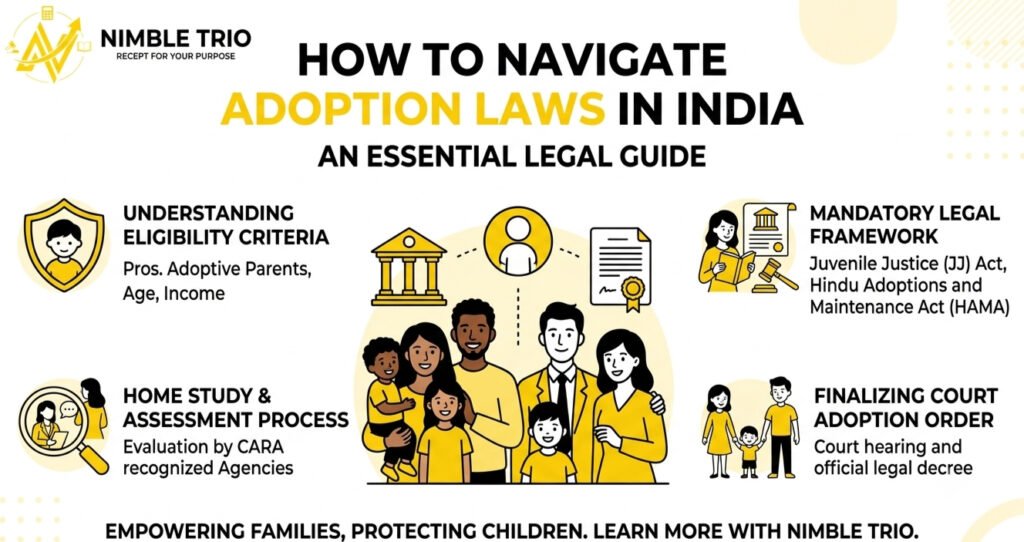
Before beginning the adoption journey, it is important to understand how adoption laws in India work. These laws ensure that authorities, adoption agencies, and courts carry out every adoption in the child’s best interests.
The primary authority overseeing adoptions in India is the Central Adoption Resource Authority (CARA), which functions under the Ministry of Women and Child Development. CARA regulates domestic and inter-country adoptions and ensures that all procedures follow established legal standards.
Depending on the circumstances, adoption may be governed under:
The Juvenile Justice (Care and Protection of Children) Act
CARA Adoption Regulations
Applicable personal laws in limited situations
The purpose of these laws is to provide children with permanent families while safeguarding their legal rights throughout the adoption process.
Step 1: Check Your Eligibility for Adoption
The first step in the adoption process is determining whether you meet the eligibility requirements.
Indian adoption laws consider several factors, including age, marital status, physical and mental health, financial stability, and the ability to provide a nurturing environment for the child.
Married couples generally need a stable relationship and mutual consent to adopt. Single individuals may also adopt, subject to applicable guidelines. Authorities evaluate each applicant based on their capacity to provide a secure and supportive home, rather than solely on financial status.
Meeting these eligibility requirements is the foundation of a successful adoption application.
Step 2: Register with an Authorized Adoption Agency
Once eligibility is confirmed, prospective parents must register through an authorized adoption agency.
The registration process involves submitting personal information, identity documents, financial records, and other supporting paperwork. Authorized agencies guide applicants through every stage and ensure that all legal requirements are fulfilled.
Choosing a recognized agency is extremely important because unauthorized adoption arrangements may not receive legal recognition.
Step 3: Complete the Home Study Report
One of the most significant stages in the adoption journey is the Home Study Report.
A trained social worker visits the prospective adoptive parents to assess their family environment, emotional readiness, lifestyle, and ability to care for a child. The purpose is not to judge applicants but to ensure that the child will be placed in a safe and loving home.
The report also allows social workers to understand the family’s expectations and prepare them for parenthood.
Many prospective parents feel anxious about this step, but adoption authorities designed the Home Study Report to support both the child and the family throughout the adoption process.
Step 4: Child Referral and Acceptance
After the Home Study Report is approved, eligible parents are matched with a legally available child.
The referral includes important information such as:
Medical records
Developmental history
Background information
Child assessment reports
Parents are encouraged to carefully review these documents before accepting the referral.
This stage requires thoughtful consideration because adoption is a lifelong commitment that affects both the child and the family.
Step 5: Legal Documentation and Verification
Once the referral is accepted, the legal documentation process begins.
This stage involves preparing and verifying several documents, including:
- Identity proof
- Address proof
- Marriage certificate (if applicable)
- Income proof
- Medical certificates
- Photographs
- Other documents required by the adoption authorities
Proper documentation ensures compliance with adoption laws in India and helps avoid unnecessary delays.
Professional legal assistance can be particularly valuable during this phase to ensure every document is complete and correctly submitted.
Step 6: Court Proceedings and Adoption Order
After all documentation has been verified, the adoption case proceeds before the appropriate legal authority.
The court examines whether every legal requirement has been fulfilled and confirms that the adoption serves the child’s best interests.
If satisfied, the court grants the adoption order, making the adoptive parents the child’s legal parents with all associated rights and responsibilities.
This legal order provides permanent recognition of the parent-child relationship.
Step 7: Post-Adoption Follow-Up
The legal process does not necessarily end after the adoption order is issued.
In certain cases, particularly inter-country adoptions, post-adoption follow-up visits may be required.
These visits help ensure that the child is adjusting well to the new family and receiving proper care, education, emotional support, and healthcare.
The purpose is to promote the child’s long-term well-being rather than monitor or interfere with family life.
Common Challenges During the Adoption Process
Although India’s adoption system has become more transparent, prospective parents may still encounter challenges.
Processing times can vary depending on the availability of children, documentation requirements, and administrative procedures. Missing documents or incomplete applications may delay approval.
Emotional uncertainty is also common, particularly during waiting periods. Many families find reassurance by staying informed, maintaining regular communication with their adoption agency, and seeking guidance whenever needed.
Understanding adoption laws in India in advance significantly reduces confusion and helps families navigate these challenges with confidence.
Why Legal Guidance Matters
Adoption is much more than paperwork—it creates a lifelong legal relationship between parents and a child.
Working with experienced legal professionals helps ensure that:
Documentation is accurate.
Legal procedures are properly followed.
Court requirements are fulfilled.
The adoption complies with current Indian regulations.
Future legal complications are minimized.
Professional guidance allows adoptive parents to focus on preparing for their child’s arrival while experts handle the legal formalities.
Final Thoughts
Understanding adoption laws in India is the first step toward building a secure and legally recognized family through adoption. While the process involves several stages—from eligibility checks and registration to court approval and post-adoption support—each step is designed to protect the child’s best interests and provide adoptive parents with legal certainty.
Although the journey may require patience, preparation, and careful documentation, the outcome is life-changing for both the child and the family. By following the correct legal procedures and seeking professional guidance when needed, prospective parents can navigate the adoption process with confidence and peace of mind.
If you are planning to adopt, taking the time to understand the legal framework today will help make your adoption journey smoother, legally compliant, and emotionally rewarding.
(CA, Lawyer, GST, Trademark, ITR)


Leave a Comment