

Introduction
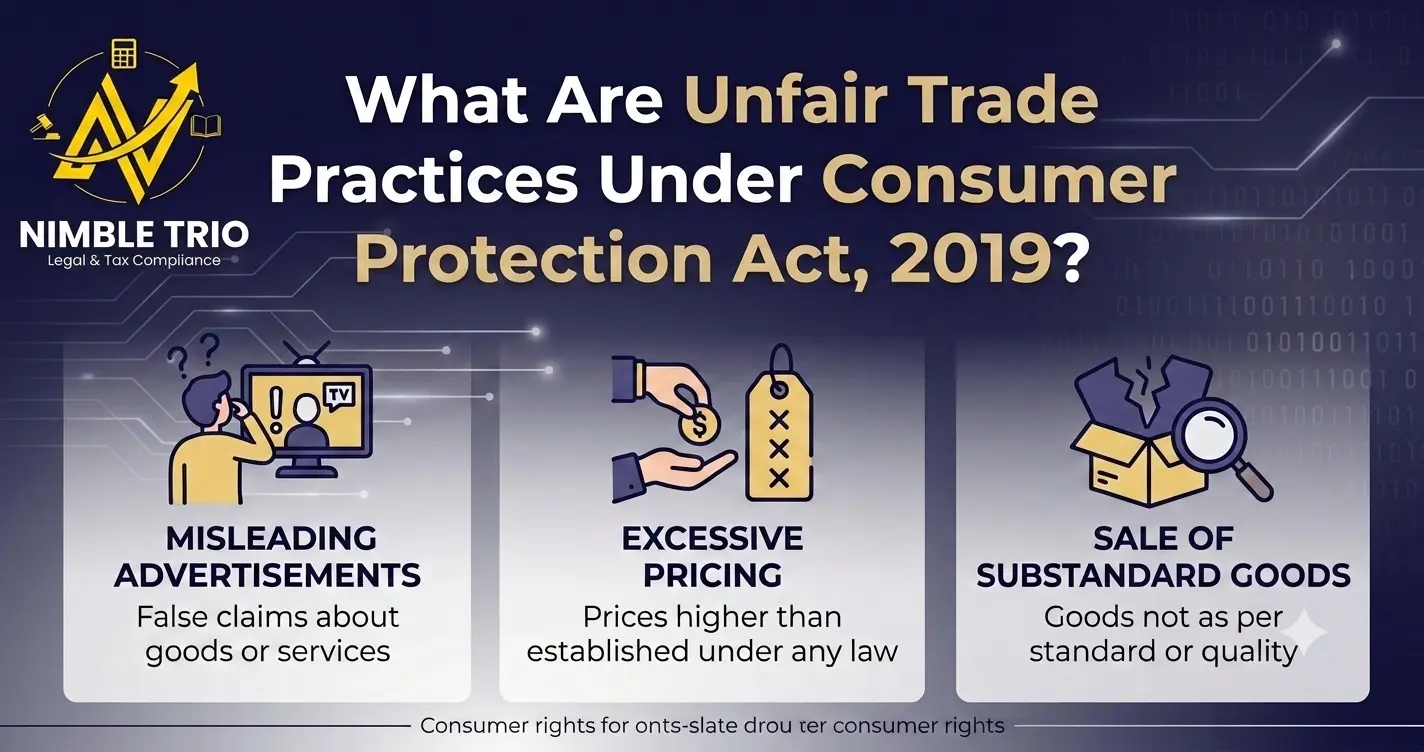
Unfair Trade Practices Under Consumer Protection Act, 2019 refer to unfair business methods where sellers, manufacturers, or service providers mislead consumers through false information, deceptive advertisements, or incorrect claims. These practices can influence consumer decisions and may cause financial loss.
In India, consumer protection laws help maintain transparency between businesses and customers. The Consumer Protection Act, 2019 provides better protection against misleading advertisements, unfair business practices, and consumer exploitation.
For example, if a company promotes a product by claiming “100% guaranteed results” without proper proof, it may mislead customers. Similarly, showing fake discounts by increasing prices before a sale can also be considered an unfair practice.
At Nimble Trio, our legal professionals assist consumers and businesses in understanding consumer laws, resolving disputes, and finding practical legal solutions related to unfair trade practices.
What Are Unfair Trade Practices in India?
Unfair trade practices in India include dishonest methods used by businesses to increase sales or profits by misleading customers. These practices may involve false advertisements, hidden charges, fake offers, incorrect product information, or false promises.
Such practices affect consumer trust and may violate consumer rights. Therefore, consumers have legal remedies under the Consumer Protection Act, 2019.
Common examples include:
- False product claims
- Misleading advertisements
- Fake discounts
- Hidden charges
- Incorrect service information
Unfair Trade Practices Section Under Consumer Protection Act, 2019
The Consumer Protection Act, 2019 defines unfair trade practices under Section 2(47). This section explains different business activities that mislead consumers or provide unfair advantages to sellers.
Section 2(47) covers practices such as:
- False statements about product quality, standard, or benefits.
- Misleading advertisements that create wrong impressions.
- False claims about approval, sponsorship, or certification.
- Offering gifts, prizes, or schemes without the intention to provide them.
- Creating artificial demand through unfair methods.
For example, if a company claims that its product is approved by a government authority without any actual approval, it may fall under unfair trade practices.
Similarly, if a business advertises a discount that does not actually exist, consumers can take legal action against such misleading practices.
Therefore, businesses must provide accurate information and follow fair practices while dealing with customers.
10 Examples of Unfair Trade Practices
Understanding unfair trade practices examples helps consumers identify violations and protect their rights.
1. Misleading Advertisements
Businesses cannot make false claims about product benefits, quality, or performance. Such advertisements may influence customers to make wrong purchasing decisions.
2. Fake Discounts and Offers
Showing false discounts or creating fake sale offers to attract customers can be considered deceptive.
3. Hidden Charges
Charging additional fees without informing consumers clearly may violate consumer rights.
4. False Product Claims
Incorrect statements about product features, certifications, or benefits can mislead customers.
5. Selling Defective Goods
Providing defective products without replacement, repair, or refund may result in consumer complaints.
6. Fake Reviews and Testimonials
Using fake reviews to improve product reputation can mislead potential buyers.
7. Misleading Packaging
Packaging that creates a false impression about quantity, quality, or ingredients may affect consumer decisions.
8. False Guarantees
Businesses cannot make unrealistic promises regarding product performance.
9. Unfair Service Conditions
Companies cannot impose unreasonable terms that negatively affect consumers.
10. Misrepresentation of Services
Providing incorrect information about service fees, benefits, or results may lead to legal disputes.
Important Case Laws on Unfair Trade Practices in India
Several unfair trade practices case laws have helped strengthen consumer rights in India.
Tata Press Ltd. v. MTNL
In this case, the Supreme Court recognised the importance of commercial advertisements and consumer information. The decision highlighted that consumers have the right to receive accurate information before making purchasing decisions.
Indian Medical Association v. V.P. Shantha
This landmark case explained the responsibility of service providers and strengthened consumer protection principles.
These cases show that businesses must maintain transparency and cannot use misleading methods to influence consumers.
Unfair Trade Practices Punishment and Legal Remedies
The consequences of unfair trade practices depend on the seriousness of the violation. Under the Consumer Protection Act, 2019, consumers can seek different legal remedies, including:
- Compensation for financial loss.
- Refund or replacement of defective products.
- Removal of misleading advertisements.
- Discontinuation of unfair business practices.
- Legal action against businesses involved in consumer fraud.
Additionally, the Central Consumer Protection Authority (CCPA) can investigate unfair trade practices, stop misleading advertisements, and take action against businesses violating consumer rights.
How to File Complaint Against Unfair Trade Practices?
Consumers can file a consumer complaint for unfair trade practices before the appropriate consumer dispute redressal commission.
The process generally includes:
Step 1: Collect Evidence
Keep important documents such as:
- Bills and invoices
- Product photographs
- Advertisements
- Payment records
- Emails or messages
Step 2: Contact the Business
First, consumers can approach the company and request a proper resolution.
Step 3: File Consumer Complaint
If the issue remains unresolved, consumers can file a complaint before the consumer commission.
An experienced unfair trade practices lawyer in India can help prepare legal documents, explain consumer rights, and represent consumers during proceedings.
Why Choose Nimble Trio for Consumer Protection Matters?
Nimble Trio provides professional legal support for consumer disputes involving unfair trade practices, misleading advertisements, defective products, and unfair business activities.
Our legal team helps clients with:
- Consumer dispute consultation
- Assistance with consumer complaint filing
- Legal guidance for unfair trade practice matters
- Business compliance with consumer protection laws
Whether you are a consumer seeking justice or a business requiring legal guidance, Nimble Trio provides reliable and practical legal solutions.
If you are facing unfair trade practices or consumer disputes, contact Nimble Trio today for professional legal consultation and understand your rights under the Consumer Protection Act, 2019.
Conclusion
Unfair Trade Practices Under Consumer Protection Act, 2019 protect consumers from misleading advertisements, false claims, and deceptive business methods.
The law provides strong remedies for consumers who face unfair treatment. Therefore, understanding consumer rights and taking timely legal action is important.
If you need assistance regarding consumer disputes, misleading advertisements, or unfair trade practices in India, Nimble Trio can help you with professional legal guidance.
(FAQs)
What is an unfair trade practice under Consumer Protection Act, 2019?
It refers to misleading or deceptive business practices that affect consumer rights and influence buying decisions unfairly.
Which section deals with unfair trade practices?
Unfair trade practices are defined under Section 2(47) of the Consumer Protection Act, 2019.
What are 10 examples of unfair trade practices?
Examples include misleading advertisements, fake discounts, hidden charges, false claims, defective goods, and fake reviews.
How can I file a complaint against unfair trade practices?
Consumers can file complaints through consumer dispute redressal commissions with proper evidence and documents.
What punishment is given for unfair trade practices in India?
Actions may include penalties, removal of misleading advertisements, compensation, and other legal remedies.


