

Blog

Your blog category

Complete guide for Trade License Registration in India showing documents, fees, process, and renewal details by Nimble Trio.
Blog

Trade License Registration in India: Documents, Fees, Process & Renewal Guide

Introduction Trade License Registration in India is an important legal requirement for businesses that want to operate legally within a specific municipal area. It allows businesses to carry out commercial activities while complying with local government rules, safety standards, and regulations. Whether you are starting a shop, restaurant, manufacturing unit, or service-based business, obtaining a trade license helps avoid penalties and ensures smooth operations. In this guide, we will explain the complete trade license registration process, required documents, fees, eligibility criteria, and renewal procedure.  What is Trade License Registration in India? Trade License Registration in India is an official approval issued by the municipal corporation or local authority that permits a business owner to carry out commercial activities at a particular location. The main purpose of a trade license is to ensure that businesses follow health, safety, and environmental guidelines. It prevents activities that may create risks or inconvenience for the public. A trade license does not provide ownership rights over a property. Instead, it gives permission to use specific premises for approved business activities. Different states and municipal authorities have different rules, application procedures, and fee structures. Therefore, business owners should check the requirements applicable to their location. Why is Trade License Registration Required in India? A trade license is important because it confirms that a business is operating legally. Additionally, it helps authorities maintain proper standards for commercial activities. The major benefits of obtaining a trade license include: Furthermore, many businesses require a trade license before applying for additional approvals and registrations. Who Needs Trade License Registration in India? Most businesses involved in commercial activities require a trade license. However, the requirement depends on the business type and local municipal rules. Businesses that generally require a trade license include: Therefore, entrepreneurs should verify whether their business activity requires a trade license before starting operations. Eligibility Criteria for Trade License Registration Before applying for a trade license, applicants must meet certain eligibility requirements. The basic eligibility criteria include: Additionally, some industries may need extra approvals before receiving a trade license. Documents Required for Trade License Registration in India The documents required for Trade License Registration in India may vary depending on the business type and location. However, commonly required documents include: Personal Documents Business Documents Moreover, certain businesses may need additional documents such as: Submitting accurate documents helps complete the registration process faster. Trade License Registration Process in India The Trade License Registration Process in India involves several simple steps. Business owners can apply online or offline depending on the municipal authority. Step 1: Check Local Requirements First, identify the trade license requirements according to your business activity and location. Each municipal corporation may follow different guidelines. Step 2: Prepare Required Documents Next, collect all necessary documents, including identity proof, business details, and property documents. Step 3: Submit Trade License Application The applicant needs to submit the application form through the municipal corporation website or local office. Step 4: Document Verification After submission, the authority reviews the application and verifies the provided information.In some cases, officials may inspect the business premises to confirm compliance. Step 5: Pay Applicable Fees Once the documents are approved, applicants must pay the required government fees. Step 6: Receive Trade License Certificate After successful verification, the municipal authority issues the trade license certificate. Online Trade License Registration Process in India Many municipal corporations now provide online facilities for Trade License Registration in India. The online process generally includes: Online registration saves time and makes the process more convenient for business owners. Trade License Registration Fees in India The Trade License Registration in India fees depend on several factors, such as: Small businesses usually have lower fees compared to large commercial establishments. Additionally, inspection charges or processing fees may apply in some areas. Since fee structures differ between cities and states, applicants should check the latest charges with their local authority. How Long Does It Take to Get a Trade License? The processing time for a trade license depends on document verification and municipal authority procedures. Generally, approval may take around 7 to 30 working days after submitting a complete application. However, delays may occur if: Therefore, submitting accurate documents helps avoid unnecessary delays. Trade License Renewal Process in India A trade license is usually issued for a limited period and requires timely renewal. The Trade License Renewal Process generally includes: Moreover, renewing the license on time helps businesses continue operations without penalties. Difference Between Trade License and GST Registration Trade License GST Registration Issued by municipal authority Issued by GST department Allows business operation in a specific area Allows tax compliance Focuses on local business regulations Focuses on indirect taxation Required based on business activity and location Required based on GST eligibility Both registrations serve different purposes and may be required by businesses depending on their operations. Penalties for Operating Without a Trade License Operating a business without a valid trade license can create legal problems. Municipal authorities may impose penalties, fines, or restrictions. Additionally, businesses without proper registration may face difficulties while: Therefore, completing Trade License Registration in India before starting business activities is highly recommended. How Nimble Trio Helps with Trade License Registration Completing government registrations can be challenging due to documentation and compliance requirements. Nimble Trio provides professional assistance for Trade License Registration in India. Our experts help businesses with: With expert assistance, businesses can complete the registration process smoothly and focus on their growth. Conclusion Trade License Registration in India is an important compliance step for businesses that want to operate legally and build customer trust. From document preparation and application submission to renewal, every stage requires proper attention. A valid trade license helps businesses avoid penalties and maintain smooth operations. If you need professional support for trade license registration, Nimble Trio can assist you with complete guidance and hassle-free compliance solutions. Contact our experts today to complete your registration process efficiently. (FAQs) 1. What is the validity of a trade license in India? The validity of a trade
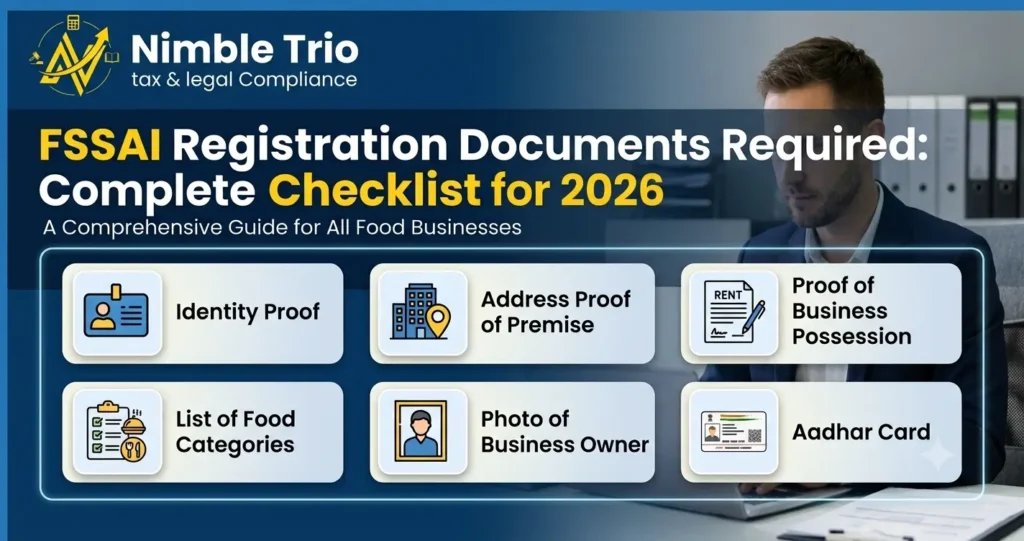

Complete checklist of required documents for FSSAI registration in 2026 by Nimble Trio.
Blog

FSSAI Registration Documents Required: Complete Checklist for 2026

FSSAI Registration Documents Required Starting a food business in India involves more than preparing delicious food. Every food business operator must comply with the Food Safety and Standards Authority of India (FSSAI) regulations. One of the most important steps is submitting the FSSAI Registration Documents Required during the application process. Whether you own a restaurant, cloud kitchen, bakery, grocery store, food manufacturing unit, or online food business, having the correct documents helps you obtain your FSSAI registration quickly. Missing or incorrect paperwork often leads to delays or rejection. In this guide, you’ll learn the complete list of FSSAI Registration Documents Required, business-specific document requirements, common mistakes to avoid, and tips for faster approval. Why Are FSSAI Registration Documents Required? The Food Safety and Standards Authority of India requires businesses to verify their identity, business location, and food-related activities before issuing a license or registration. Submitting the correct FSSAI Registration Documents Required helps authorities: As a result, complete documentation speeds up the approval process. Basic FSSAI Registration Documents Required Most food businesses must submit the following documents. 1. Passport-Size Photograph A recent passport-size photograph of the applicant is required. Ensure that: 2. Identity Proof Any one of the following is generally accepted: The details should match the application form. 3. Address Proof Applicants must provide proof of residence. Accepted documents include: 4. Business Address Proof The business location must also be verified. Common documents include: 5. Declaration Form Applicants must sign the required declaration confirming that all submitted information is accurate. FSSAI Registration Documents Required for Different Food Businesses Different food businesses may require additional documents depending on their operations. For Restaurants Restaurants generally need: For Cloud Kitchens Cloud kitchens should submit: For Grocery Stores Retail grocery stores usually require: For Food Manufacturers Manufacturing businesses require additional documents such as: For Food Importers Importers generally need: Extra Documents Needed for State and Central FSSAI Licence Businesses applying for a State or Central Licence may need additional documentation. These include: Submitting all applicable FSSAI Registration Documents Required at once helps avoid unnecessary delays. Documents Required Based on Business Type The document checklist may vary depending on the legal structure of your business. Proprietorship Partnership Firm Private Limited Company LLP Common Mistakes While Submitting FSSAI Registration Documents Required Many applications are delayed because of avoidable errors. Some common mistakes include: Double-check every document before uploading. Tips for Faster FSSAI Approval Want faster approval? Follow these practical tips. These simple steps can reduce processing delays significantly. How Nimble Trio Can Help Applying for FSSAI registration can be confusing, especially if you’re unsure which documents apply to your business. Nimble Trio simplifies the entire process by helping you prepare the correct FSSAI Registration Documents Required, reviewing your application for accuracy, and ensuring compliance with FSSAI guidelines. From document verification to application filing, our experts provide end-to-end assistance so you can focus on growing your food business. Conclusion Submitting the correct FSSAI Registration Documents Required is the first step toward obtaining a valid food licence in India. Whether you operate a small food stall, restaurant, cloud kitchen, grocery shop, or manufacturing unit, complete and accurate documentation helps ensure a smooth approval process. Before applying, review your checklist carefully and verify that every document is valid, clear, and up to date. If you need professional guidance, Nimble Trio can help you prepare the right documents and complete your FSSAI registration efficiently.

Step-by-step guide on how to apply for PSARA license online in India by Nimble Trio, featuring a process infographic and security badge.
Blog

How to Apply for PSARA License Online in India: Step-by-Step Process

Introduction Starting a private security agency in India requires a valid PSARA License to operate legally. Many entrepreneurs want to understand the PSARA License online application process in India, including eligibility, required documents, fees, and approval timelines. The How to Apply for PSARA License Online in India: Step-by-Step Process guide explains every important step required to obtain approval under the Private Security Agencies Regulation Act (PSARA), 2005. At Nimble Trio, we help businesses complete PSARA License registration with proper documentation, legal guidance, and compliance support. What is a PSARA License? A PSARA License is a government authorization required for operating a private security agency in India. It is issued under the Private Security Agencies Regulation Act, 2005 by the respective state’s Controlling Authority. This license confirms that a security agency: Without a valid PSARA License, a private security agency cannot legally provide security services in India. Why is PSARA License Required for Private Security Agencies? The private security industry plays an important role in protecting businesses, infrastructure, and individuals. Therefore, the government introduced PSARA regulations to maintain quality and accountability. A PSARA License helps agencies: For companies hiring security services, a valid PSARA License also acts as proof that the agency follows legal and safety standards PSARA License Eligibility Criteria in India Before applying for a PSARA License, applicants must fulfill certain eligibility requirements. A person or organization can apply if they meet the following conditions: Who Can Apply for PSARA License? The following entities can apply: Applicant Requirements The applicant must: Who Cannot Apply for PSARA License? An application may be rejected if the applicant: Documents Required for PSARA License Application Preparing correct documents is one of the most important steps in the PSARA registration process. Missing or incorrect documents can delay approval. Business Documents Required business documents generally include: Applicant Documents Documents required for directors, partners, or owners include: Additional PSARA Documents Applicants may also need: PSARA License Fees in India The government fee for a PSARA License depends on the number of districts where the security agency wants to operate. Area of Operation Government Application Fee One District ₹5,000 Five Districts ₹10,000 More Than Five Districts ₹25,000 Apart from government fees, applicants may also need to consider professional service charges, documentation costs, and training-related expenses. The total cost of obtaining a PSARA License depends on the state, business structure, and professional assistance required. How to Apply for PSARA License Online in India: Step-by-Step Process The PSARA License application process involves several important stages. Following each step correctly helps avoid rejection and delays. Step 1: Register Your Business Entity Before applying for a PSARA License, you must have a legally registered business. You can register your security agency as: A registered entity improves credibility and makes compliance easier Step 2: Prepare Required Documents Collect all necessary documents before starting the online application. Ensure that: Proper documentation helps speed up the approval process. Step 3: Complete Police Verification Police verification is a mandatory requirement under PSARA regulations. Verification is generally required for: The purpose of verification is to confirm that individuals associated with the agency do not have disqualifying criminal records. Step 4: Sign Training Agreement With a Security Training Institute A private security agency must ensure that security guards receive proper training. Therefore, applicants need to enter into an agreement with a recognized security training institute. Training generally covers: Step 5: Submit PSARA License Application Online After completing all requirements, applicants can submit their application through the respective State Controlling Authority portal. The application generally includes: After submission, the authority reviews the application. Step 6: Application Verification and Approval The concerned authority checks: If all requirements are fulfilled, the PSARA License is issued. However, incomplete information or incorrect documents may result in additional queries or rejection. How Long Does It Take to Get a PSARA License? The approval timeline depends on: Generally, the process may take several weeks after successful submission. Applicants can reduce delays by ensuring all documents are complete before filing. PSARA License Renewal Process A PSARA License is generally valid for five years. After expiry, security agencies must apply for renewal to continue operations legally. The renewal process includes: Applying before expiry helps avoid business interruptions. Penalty for Operating Without PSARA License Operating a private security agency without a valid PSARA License can create serious legal problems. Possible consequences include: Therefore, obtaining a PSARA License before starting security operations is essential. Common Reasons for PSARA License Rejection Many applications face delays because of avoidable mistakes. Common reasons include: Incorrect Documentation Submitting incomplete or inaccurate documents can result in rejection. Failed Police Verification Negative verification reports may affect approval. Incorrect Application Details Wrong business information or missing details can create issues. Lack of Training Agreement Failure to provide required security training arrangements may delay the application. How Nimble Trio Helps With PSARA License Registration Obtaining a PSARA License requires proper legal understanding and accurate documentation. At Nimble Trio, our professionals help businesses complete the registration process smoothly. Our PSARA License services include: With professional support, security agencies can avoid common mistakes and focus on building their business. Conclusion  Obtaining a PSARA License is essential for anyone planning to start a private security agency in India. Understanding the How to Apply for PSARA License Online in India: Step-by-Step Process helps businesses complete registration, documentation, and compliance requirements smoothly. With proper guidance, you can avoid delays and ensure a hassle-free application process. Nimble Trio helps businesses with PSARA License registration, documentation support, and legal compliance assistance. Contact our experts today to get professional guidance for your PSARA License application.

GST on residential property rules and tax rates guide featured image by Nimble Trio
Blog

GST On Residential Property: GST Rules & Rates

Introduction GST On Residential Property is an important factor that every home buyer, seller, and real estate investor should understand before completing a property transaction. The introduction of Goods and Services Tax (GST) has changed the taxation structure of the real estate sector and affects how buyers calculate the overall cost of purchasing a residential property. Whether you are buying an apartment from a builder, investing in an under-construction project, or purchasing a completed home, understanding GST rules helps you make better financial decisions. The applicability of GST depends on various factors, including the type of property, construction status, and nature of the transaction. At Nimble Trio, our property lawyers help buyers, sellers, and investors understand property laws, review legal documents, and address real estate-related concerns. Our legal team provides guidance to ensure property transactions remain secure, transparent, and legally compliant. GST On Residential Property in India: Basic Rules Explained The rules related to GST On Residential Property mainly depend on whether the property is under construction, ready to move, or purchased through resale. GST is generally applicable when a buyer purchases a residential property from a builder before receiving the completion certificate. However, completed residential properties sold after receiving the completion certificate are generally outside the scope of GST. Before purchasing a residential property, buyers should check: Understanding these factors helps buyers calculate the actual property cost and avoid unexpected financial issues. GST On Residential Property: GST Rates and Charges The GST rates on residential property depend on the type of housing project and government regulations. Property Type Applicable  GST Rate Affordable residential  housing 1% GST without ITC Other residential properties 5% GST without ITC Completed property after  completion certificate Generally no GST Resale residential property Generally no GST  These GST rates mainly apply to under-construction residential properties purchased from builders. For example, if a buyer purchases a flat that is still under construction, GST may be added to the property price. Therefore, buyers should verify the applicable GST rate before making payments or signing agreements. Apart from GST, buyers should also consider other expenses, including: GST On Residential Property for Under-Construction Flats GST On Residential Property for under-construction flats is one of the most important concerns for home buyers. When a buyer purchases a property before completion, GST is generally applicable because the transaction involves construction services provided by the builder. Buyers purchasing under-construction properties should carefully check: Many buyers face confusion regarding GST calculation and property agreements. Therefore, reviewing documents before making payments is highly recommended. At Nimble Trio, our legal professionals assist clients in reviewing property agreements, identifying possible risks, and understanding legal obligations before completing a real estate transaction. GST On Residential Property for Ready-to-Move Homes GST On Residential Property for ready-to-move homes depends on the completion status of the property at the time of sale. Generally, GST is not applicable when: Ready-to-move properties are often preferred by buyers because GST does not increase the purchase price. However, buyers should still verify ownership records, approvals, and property documents before investing. A property may appear ready for possession, but proper legal verification helps avoid future ownership disputes and documentation issues. GST Exemption on Residential Property GST exemption on residential property mainly applies to completed residential properties and certain eligible housing projects. However, GST exemption does not mean that there are no other costs involved in purchasing a property. Buyers may still need to pay: Before investing, buyers should verify: According to the latest GST provisions, rules may change through government notifications. Buyers should verify updated GST information before completing a transaction. GST On Residential Property: Rules for Resale Homes GST On Residential Property for resale homes is an important consideration for buyers purchasing an existing property. When a buyer purchases a completed residential property from an existing owner, GST is generally not applicable because the transaction does not involve construction services from a builder. However, buyers should complete proper legal verification, including: A proper legal review helps buyers avoid ownership disputes and documentation problems in the future. Impact of GST On Residential Property for Buyers and Investors GST has brought more transparency to the real estate sector by creating a structured taxation system. For home buyers, understanding GST helps in calculating the total cost of property ownership. For investors, GST knowledge is important because taxation can influence: Before investing in residential property, buyers and investors should evaluate: A well-planned decision can reduce financial risks and provide better investment security. Important Legal Checks Before Buying Residential Property Apart from understanding GST On Residential Property, buyers should complete important legal checks before purchasing a home. These include: Property transactions involve complex legal procedures. Professional legal assistance can help buyers identify risks and complete transactions smoothly. Need Legal Assistance for Property Purchase? Buying a residential property is a major financial decision. Incorrect documentation, unclear agreements, or misunderstanding of GST obligations can create future complications. Nimble Trio provides property legal services to help buyers, sellers, and investors with document verification, agreement review, legal consultation, and real estate-related matters. Our legal experts assist clients in making secure and legally compliant property decisions. Consult Nimble Trio Property Lawyers for reliable legal guidance. Conclusion Understanding GST On Residential Property is essential for anyone planning to buy, sell, or invest in residential real estate in India. GST applicability depends on several factors, including whether the property is under construction, ready to move, or purchased through resale. While under-construction properties generally attract GST, completed residential properties after receiving a completion certificate are generally exempt. Buyers should carefully review GST rates, property documents, and legal requirements before completing any transaction. If you need assistance with property documentation, GST-related concerns, or legal verification, Nimble Trio can help you with professional property legal solutions. Our experienced legal team provides guidance to ensure your real estate transactions remain secure and compliant with applicable laws. (FAQs) What is GST On Residential Property? GST On Residential Property refers to the tax applicable on certain residential property transactions, especially when buyers purchase under-construction properties

What Are the Key Financial Fraud Cases in India Nimble Trio
Blog

What Are the Biggest Financial Fraud Cases in India? 

Introduction Financial Fraud Cases in India have become a major concern for individuals, businesses, banks, and investors. With the growth of digital payments, online banking, and financial platforms, fraudsters are using advanced methods to target people and cause financial losses. Understanding the biggest financial frauds in India, learning from recent financial fraud cases, and identifying fraud warning signs can help individuals take preventive steps. This guide explains major fraud cases, common types of financial fraud, reporting procedures, legal options, and how legal assistance can help victims. What Are Financial Fraud Cases in India? Financial Fraud Cases in India involve illegal activities where individuals or organizations use deception, false information, or unauthorized methods to gain financial benefits. Common types of financial fraud include: These frauds can affect individuals, businesses, and financial institutions. Therefore, awareness and quick action are important to reduce financial risks. Biggest Financial Fraud Cases in India India has witnessed several major financial scams that affected investors, banks, and companies. Some of the biggest financial frauds in India include: Major Financial Fraud Cases in India Overview Fraud Case Year Category Key  Impact Satyam Scam 2009 Corporate Fraud Accounting manipulation and investor losses Harshad Mehta Scam 1992 Securities Fraud Stock market regulation changes PNB Fraud Case 2018 Banking Fraud Major banking system concerns Nirav Modi Case 2018 Banking Fraud Large-scale financial investigation IL&FS Crisis 2018 Corporate Financial Crisis Impact on investors and lenders Saradha Chit Fund Scam 2013 Investment Fraud Thousands of investors affected DHFL Case 2019 Corporate Fraud Financial irregularity investigations PMC Bank Fraud Case 2019 Banking Fraud Depositors faced financial difficulties  Major Financial Fraud Cases Explained Satyam Computer Services Fraud Case The Satyam fraud case is one of India’s most famous corporate fraud cases. The company was accused of manipulating financial records and showing incorrect financial information. This case highlighted the importance of: Harshad Mehta Securities Scam The Harshad Mehta scam was a major stock market fraud involving manipulation of banking systems and securities transactions. The case resulted in stronger financial market regulations and increased focus on transparency in stock trading. Punjab National Bank (PNB) Fraud Case The PNB fraud case became one of India’s largest banking fraud cases. It involved unauthorized banking transactions and raised concerns about internal banking controls. The incident highlighted the need for: Nirav Modi Banking Fraud Case The Nirav Modi case became one of the most discussed financial fraud cases in India. It involved allegations related to fraudulent banking transactions and financial irregularities. The case showed the importance of proper verification and risk management in financial institutions. IL&FS Financial Crisis The IL&FS crisis affected investors and lenders and raised concerns about corporate debt management and financial transparency. It highlighted the importance of proper financial planning and internal controls. Saradha Chit Fund Scam The Saradha scam affected thousands of investors through investment schemes promising high returns. The case highlighted risks related to: List of Financial Frauds in India: Common Types Banking Fraud Banking fraud includes unauthorized transactions, fake customer care calls, account misuse, and online banking scams. Loan Fraud Loan fraud involves fake loan offers, advance payment scams, and misuse of personal documents. Investment Fraud Investment fraud occurs when criminals offer unrealistic returns through fake investment schemes or trading platforms. Cyber Fraud Cases Cyber fraud includes phishing attacks, online payment scams, fake websites, identity theft, and account hacking. Corporate Fraud Corporate fraud involves manipulation of financial records, false reporting, or misuse of company funds. Recent Financial Fraud Cases and New Fraud Trends Recent financial fraud cases show that criminals are increasingly using technology to target victims. Common fraud trends include: Fraudsters often create urgency to convince victims. Always verify financial information before making payments or sharing personal details. Warning Signs of Financial Fraud You should be careful if someone: Recognizing these signs early can help prevent financial losses. How to Report Financial Fraud in India? If you become a victim of financial fraud, take immediate action: 1. Contact Your Bank Inform your bank about unauthorized transactions and request necessary security measures. 2. Preserve Evidence Keep important records such as: 3. File a Complaint Report the fraud to the appropriate authorities with complete details and supporting evidence. 4. Seek Legal Assistance Financial fraud cases may involve complex investigations. Legal guidance can help victims understand their rights and available remedies. Can Victims Recover Money Lost Due to Financial Fraud? Recovery depends on: Quick reporting can improve the chances of stopping further losses and taking legal action. Laws Related to Financial Fraud in India Financial fraud cases may involve different legal provisions depending on the nature of the offence. These may include: Since every fraud case is different, professional legal advice can help determine the right approach. Why Choose Nimble Trio for Financial Fraud Legal Assistance? Financial fraud cases involve complex documents, digital evidence, and legal procedures. At Nimble Trio, we provide professional legal assistance to individuals and businesses dealing with financial fraud matters. Our legal professionals assist clients with: Whether you are facing banking fraud, loan fraud, investment scams, or cyber-enabled financial fraud, Nimble Trio helps you understand your rights and take appropriate legal steps. Conclusion Financial Fraud Cases in India continue to impact individuals, businesses, banks, and investors. Understanding the biggest financial frauds in India, learning about recent financial fraud cases, and recognizing fraud risks can help people stay protected. Financial fraud matters require proper legal understanding because they involve evidence, investigations, and financial regulations. Nimble Trio provides professional legal assistance for financial fraud matters and helps clients understand their rights and available legal options.

Cyber Crime Complaint Online Helpline Number 1930 and Filing Process in India by Nimble Trio
Blog

Cyber Crime Complaint Online: Helpline Number & Process in India

Introduction Have you lost money due to an online fraud or someone has hacked your social media account? Taking immediate action through a Cyber Crime Complaint Online can help protect your information and increase the chances of recovery. hacking, identity theft, financial scams, and social media crimes are becoming common in India. A Cyber Crime Complaint Online allows victims to report digital offences quickly and seek help from the concerned authorities. Whether you have faced online payment fraud, account hacking, data theft, or cyber harassment, understanding the complaint process is important to protect your rights. In India, citizens can use official platforms like the National Cyber Crime Reporting Portal and contact the cyber crime helpline for immediate assistance. What is a Cyber Crime Complaint Online? A Cyber Crime Complaint Online is a digital complaint filed by an individual or organization against a cyber-related offence. Instead of visiting a police station immediately, victims can report cyber crimes through online platforms and provide necessary details about the incident. Cyber crime complaints may include: Moreover, online reporting helps authorities collect digital evidence and begin the investigation process faster. Types of Cyber Crimes Covered Under Online Complaint Process Cyber criminals use different methods to target individuals and businesses. Some common cyber offences reported in India include: Online Financial Fraud Online fraud is one of the most common cyber crimes. It includes fake investment schemes, UPI fraud, credit card scams, and unauthorized bank transactions. Social Media Hacking and Cyber Harassment Hackers may gain unauthorized access to Instagram, Facebook, email, or other social accounts. Cyber harassment, threats, and misuse of private information can also be reported. Identity Theft and Data Theft Identity theft occurs when criminals misuse personal information such as Aadhaar details, banking information, or other documents for illegal activities. Phishing and Online Scams Fraudsters often send fake emails, messages, or links to steal passwords, financial details, or sensitive information. How to Report Cyber Crime in India? Many victims do not know the correct steps after becoming a victim of cyber crime. Therefore, knowing How to Report Cyber Crime in India helps individuals take immediate action. Follow these steps: Step 1: Collect Digital Evidence Before filing a complaint, collect all available evidence, including: Digital evidence plays an important role during cyber crime investigations. Step 2: Visit the National Cyber Crime Reporting Portal The National Cyber Crime Reporting Portal is an official platform where citizens can register cyber crime complaints online. Users can report: The portal allows victims to submit complaint details and upload supporting documents. Step 3: Submit Complete Complaint Details While filing a cyber complaint, provide accurate information such as: Complete information helps authorities understand the case properly. Cyber Crime Helpline Number India for Immediate Support The Cyber Crime Helpline Number India provides assistance to victims facing urgent cyber fraud situations. Quick reporting is especially important in financial fraud cases because immediate action may help prevent further losses. Victims can seek help for: Additionally, reporting cyber fraud at the earliest stage increases the possibility of effective investigation. What Should You Do Immediately After Cyber Fraud? If you become a victim of cyber fraud, taking quick action can help reduce further damage and protect your information. Follow these important steps: Cyber Crime Laws in India and Legal Assistance  Cyber crimes in India are mainly governed under the Information Technology Act, 2000 along with other applicable laws. These laws deal with offences related to hacking, unauthorized access, online fraud, identity theft, and misuse of digital information. However, cyber crime cases can become complicated because they involve technical evidence, investigation procedures, and legal documentation. Therefore, professional legal guidance can help victims understand: Why Choose Nimble Trio for Cyber Crime Legal Assistance in India? Facing a cyber crime issue can be stressful, especially in cases involving online fraud, hacking, identity theft, or misuse of personal information. Taking timely legal action can help protect your rights, preserve digital evidence, and understand the right legal steps. At Nimble Trio, we provide professional cyber crime legal assistance to individuals and businesses dealing with digital offences. Our legal professionals help clients understand cyber laws, complaint procedures, and available legal remedies. We assist with cyber crime complaints, preparation of necessary information, and guidance on preserving important digital evidence such as screenshots, transaction records, emails, and messages. Our team also supports clients throughout legal procedures while helping them make informed decisions. Whether you are facing online fraud, phishing scams, social media hacking, or cyber harassment, Nimble Trio provides reliable legal guidance to help you handle your cyber crime matter effectively. Why Should You File a Cyber Crime Complaint Online Quickly? Delaying a cyber crime complaint can increase the chances of further damage. Cyber criminals may continue misusing personal information or transferring stolen funds. Quick reporting helps: Furthermore, timely reporting improves the chances of resolving cyber crime matters effectively. Documents Required for Cyber Crime Complaint Online Before submitting a complaint, keep the following information ready: Conclusion A Cyber Crime Complaint Online is an important step for anyone facing online fraud, hacking, identity theft, or digital harassment. By understanding How to Report Cyber Crime in India, using the National Cyber Crime Reporting Portal, and contacting the Cyber Crime Helpline Number India, victims can take timely action. Cyber crime cases often require proper legal understanding because they involve digital evidence and complex procedures. Nimble Trio provides professional legal support for cyber crime matters in India and helps clients protect their rights through effective legal solutions.

Unfair Trade Practices Under Consumer Protection Act, 2019
Blog

What Are Unfair Trade Practices Under Consumer Protection Act, 2019?

Introduction Unfair Trade Practices Under Consumer Protection Act, 2019 refer to unfair business methods where sellers, manufacturers, or service providers mislead consumers through false information, deceptive advertisements, or incorrect claims. These practices can influence consumer decisions and may cause financial loss. In India, consumer protection laws help maintain transparency between businesses and customers. The Consumer Protection Act, 2019 provides better protection against misleading advertisements, unfair business practices, and consumer exploitation. For example, if a company promotes a product by claiming “100% guaranteed results” without proper proof, it may mislead customers. Similarly, showing fake discounts by increasing prices before a sale can also be considered an unfair practice. At Nimble Trio, our legal professionals assist consumers and businesses in understanding consumer laws, resolving disputes, and finding practical legal solutions related to unfair trade practices. What Are Unfair Trade Practices in India? Unfair trade practices in India include dishonest methods used by businesses to increase sales or profits by misleading customers. These practices may involve false advertisements, hidden charges, fake offers, incorrect product information, or false promises. Such practices affect consumer trust and may violate consumer rights. Therefore, consumers have legal remedies under the Consumer Protection Act, 2019. Common examples include: Unfair Trade Practices Section Under Consumer Protection Act, 2019 The Consumer Protection Act, 2019 defines unfair trade practices under Section 2(47). This section explains different business activities that mislead consumers or provide unfair advantages to sellers. Section 2(47) covers practices such as: For example, if a company claims that its product is approved by a government authority without any actual approval, it may fall under unfair trade practices. Similarly, if a business advertises a discount that does not actually exist, consumers can take legal action against such misleading practices. Therefore, businesses must provide accurate information and follow fair practices while dealing with customers. 10 Examples of Unfair Trade Practices Understanding unfair trade practices examples helps consumers identify violations and protect their rights. 1. Misleading Advertisements Businesses cannot make false claims about product benefits, quality, or performance. Such advertisements may influence customers to make wrong purchasing decisions. 2. Fake Discounts and Offers Showing false discounts or creating fake sale offers to attract customers can be considered deceptive. 3. Hidden Charges Charging additional fees without informing consumers clearly may violate consumer rights. 4. False Product Claims Incorrect statements about product features, certifications, or benefits can mislead customers. 5. Selling Defective Goods Providing defective products without replacement, repair, or refund may result in consumer complaints. 6. Fake Reviews and Testimonials Using fake reviews to improve product reputation can mislead potential buyers. 7. Misleading Packaging Packaging that creates a false impression about quantity, quality, or ingredients may affect consumer decisions. 8. False Guarantees Businesses cannot make unrealistic promises regarding product performance. 9. Unfair Service Conditions Companies cannot impose unreasonable terms that negatively affect consumers. 10. Misrepresentation of Services Providing incorrect information about service fees, benefits, or results may lead to legal disputes. Important Case Laws on Unfair Trade Practices in India Several unfair trade practices case laws have helped strengthen consumer rights in India. Tata Press Ltd. v. MTNL In this case, the Supreme Court recognised the importance of commercial advertisements and consumer information. The decision highlighted that consumers have the right to receive accurate information before making purchasing decisions. Indian Medical Association v. V.P. Shantha This landmark case explained the responsibility of service providers and strengthened consumer protection principles. These cases show that businesses must maintain transparency and cannot use misleading methods to influence consumers. Unfair Trade Practices Punishment and Legal Remedies The consequences of unfair trade practices depend on the seriousness of the violation. Under the Consumer Protection Act, 2019, consumers can seek different legal remedies, including: Additionally, the Central Consumer Protection Authority (CCPA) can investigate unfair trade practices, stop misleading advertisements, and take action against businesses violating consumer rights. How to File Complaint Against Unfair Trade Practices? Consumers can file a consumer complaint for unfair trade practices before the appropriate consumer dispute redressal commission. The process generally includes: Step 1: Collect Evidence Keep important documents such as: Step 2: Contact the Business First, consumers can approach the company and request a proper resolution. Step 3: File Consumer Complaint If the issue remains unresolved, consumers can file a complaint before the consumer commission. An experienced unfair trade practices lawyer in India can help prepare legal documents, explain consumer rights, and represent consumers during proceedings. Why Choose Nimble Trio for Consumer Protection Matters? Nimble Trio provides professional legal support for consumer disputes involving unfair trade practices, misleading advertisements, defective products, and unfair business activities. Our legal team helps clients with: Whether you are a consumer seeking justice or a business requiring legal guidance, Nimble Trio provides reliable and practical legal solutions. If you are facing unfair trade practices or consumer disputes, contact Nimble Trio today for professional legal consultation and understand your rights under the Consumer Protection Act, 2019. Conclusion Unfair Trade Practices Under Consumer Protection Act, 2019 protect consumers from misleading advertisements, false claims, and deceptive business methods. The law provides strong remedies for consumers who face unfair treatment. Therefore, understanding consumer rights and taking timely legal action is important. If you need assistance regarding consumer disputes, misleading advertisements, or unfair trade practices in India, Nimble Trio can help you with professional legal guidance. (FAQs) What is an unfair trade practice under Consumer Protection Act, 2019? It refers to misleading or deceptive business practices that affect consumer rights and influence buying decisions unfairly. Which section deals with unfair trade practices? Unfair trade practices are defined under Section 2(47) of the Consumer Protection Act, 2019. What are 10 examples of unfair trade practices? Examples include misleading advertisements, fake discounts, hidden charges, false claims, defective goods, and fake reviews. How can I file a complaint against unfair trade practices? Consumers can file complaints through consumer dispute redressal commissions with proper evidence and documents. What punishment is given for unfair trade practices in India? Actions may include penalties, removal of misleading advertisements, compensation, and other

A comprehensive guide to Data Protection and Privacy Laws in India, highlighting rules, rights, and compliance.
Blog

Data Protection and Privacy Laws in India: Rules, Rights & Compliance Guide

Data Protection and Privacy Laws in India have become increasingly important as businesses and individuals depend more on digital platforms. Every day, companies collect personal information such as names, contact details, financial data, and online activity records. Protecting this information is necessary to prevent misuse, cyber threats, and privacy violations. With the growth of technology, India has introduced stronger legal frameworks to protect personal data and regulate how organisations collect, store, and process information. Understanding data privacy and protection laws helps individuals protect their rights and enables businesses to follow proper compliance practices. For companies, having a clear privacy and data protection policy is not only important for legal compliance but also helps build customer trust. This guide explains the key aspects of privacy laws, data protection requirements, business responsibilities, and the difference between privacy and data protection. What Are Data Protection and Privacy Laws in India? Data Protection and Privacy Laws in India are legal rules designed to protect personal information from unauthorised access, misuse, or disclosure. These laws define how organisations should collect, process, store, and share personal data. The main purpose of these laws is to provide individuals with more control over their personal information while making businesses responsible for maintaining data security. Types of Personal Data Covered Under Privacy Laws Personal data may include: Businesses handling customer information must ensure that data is collected for a valid purpose and protected through appropriate security measures. Importance of Data Privacy and Protection Laws In today’s digital world, personal data has become one of the most valuable assets. However, improper handling of information can result in identity theft, financial fraud, and privacy breaches. Data Privacy and Protection Laws create a secure environment where individuals can trust organisations with their personal information. Benefits of Data Privacy and Protection Laws These laws help businesses and individuals by: Moreover, businesses that follow proper data protection practices can avoid penalties and protect their reputation. Data Protection and Privacy Act 2019: Understanding the Current Legal Framework The term Data Protection and Privacy Act 2019 is commonly searched by users who want to understand India’s data protection rules. Earlier, India was working on a dedicated data protection framework through the Personal Data Protection Bill, 2019. However, India’s current data protection framework is governed by the Digital Personal Data Protection Act, 2023 (DPDP Act). This law provides guidelines for the collection, processing, storage, and protection of digital personal data. Key Features of Digital Personal Data Protection Act, 2023 The DPDP Act focuses on: Therefore, businesses should update their privacy practices according to the latest legal requirements. Difference Between Privacy and Data Protection Many people consider privacy and data protection as the same concept. However, there is an important difference between privacy and data protection. What Is Data Privacy? Privacy refers to an individual’s right to control their personal information and decide how it should be collected, used, and shared. What Is Data Protection? Data protection refers to the legal, technical, and organisational measures used to secure personal information from misuse or unauthorised access. For example, privacy allows a person to decide whether their information can be collected, while data protection ensures that the collected information remains secure. Privacy and Data Protection Policy for Businesses A strong privacy and data protection policy helps businesses explain how they collect, use, store, and protect customer information. Important Elements of a Privacy and Data Protection Policy A proper policy usually includes: Businesses should create policies that are simple, transparent, and easy for users to understand. Regular audits and compliance checks also help organisations identify risks and improve security practices. Data Protection Policy vs Privacy Policy: Key Differences The terms data protection policy and privacy policy are often confused. Although they are related, both serve different purposes. Privacy Policy A privacy policy informs users about: Data Protection Policy A data protection policy explains: In simple words: How Nimble Trio Helps With Data Protection Compliance Following Data Protection and Privacy Laws in India can be challenging because privacy regulations continue to develop. Nimble Trio provides legal support for: Our legal experts help businesses understand their responsibilities and create effective strategies to protect sensitive information. Conclusion Data Protection and Privacy Laws in India play an important role in protecting personal information in today’s digital environment. As technology continues to grow, individuals and businesses must understand their rights and responsibilities regarding data handling. A proper privacy policy, strong security practices, and legal compliance help organisations reduce risks and maintain customer confidence. Nimble Trio helps businesses understand privacy regulations and implement effective data protection solutions for long-term compliance.

Blog

Online Lawyer Consultation in India: How to Talk to a Lawyer Online, Fees & Legal Process

Online Lawyer Consultation in India has become a convenient way for individuals and businesses to get professional legal advice without visiting a lawyer’s office. With the increasing use of digital services, people can now connect with experienced lawyers through video calls, phone calls, and online platforms. Whether you need help with a property dispute, family matter, criminal case, business issue, cyber crime complaint, or legal documentation, an online lawyer consultation helps you understand your legal rights and available solutions quickly. Moreover, many people prefer to talk to a lawyer online because it saves time, reduces travel expenses, and provides easy access to legal experts from anywhere in India. What is Online Lawyer Consultation in India? Online Lawyer Consultation in India is a digital legal service that allows individuals to connect with qualified lawyers through online communication methods such as video calls, phone calls, emails, or chat platforms. During an online consultation, a lawyer reviews your legal concern, understands the facts, explains applicable laws, and suggests possible legal solutions. This service is especially helpful for people who need quick legal advice but cannot visit a lawyer’s office due to distance, busy schedules, or urgent situations. Benefits of Online Legal Consultation in India 1. Easy Access to Experienced Lawyers One major benefit of online legal consultation is that people can connect with lawyers from different cities and legal backgrounds. Therefore, you are not restricted to lawyers available only in your local area. 2. Saves Time and Money Traditional legal consultations usually require travelling and waiting for appointments. However, online consultation reduces these difficulties and provides faster access to professional legal guidance. 3. Convenient Communication You can discuss your legal problems through video calls, phone calls, or online chat according to your convenience. As a result, the legal consultation process becomes simple and accessible. 4. Privacy and Confidentiality Lawyers maintain professional confidentiality while handling client information. Additionally, online consultations provide a secure environment to discuss sensitive legal matters. How to Talk to a Lawyer Online in India? The process of consulting a lawyer online is simple and includes a few important steps: Step 1: Choose a Reliable Online Legal Consultation Service First, select a trusted legal consultation platform that connects you with qualified lawyers. Check the lawyer’s experience, practice area, and professional background before booking a consultation. Step 2: Share Your Legal Issue Provide complete details about your legal problem, including important documents, facts, dates, and previous legal actions. Clear information helps the lawyer understand your situation properly. Step 3: Schedule Your Online Consultation Choose a suitable appointment time according to your availability. You can connect through video meetings, phone calls, or online chat. Step 4: Discuss Legal Solutions During the consultation, the lawyer explains your legal rights, possible solutions, required documents, and the next steps you should follow. Types of Legal Matters Covered Under Online Lawyer Consultation Online lawyer consultation services cover different areas of law, including: Criminal Law Consultation People dealing with criminal allegations, FIR issues, bail matters, or investigations can seek professional legal advice online. Family Law Consultation Lawyers provide guidance related to divorce, child custody, maintenance, marriage disputes, and other family matters. Property and Real Estate Legal Advice Online legal consultation helps individuals understand property disputes, ownership issues, agreements, and documentation requirements. Business and Corporate Legal Consultation Businesses can consult lawyers regarding contracts, compliance matters, agreements, and corporate disputes. Cyber Crime Legal Consultation Victims of online fraud, hacking, identity theft, and cyber offences can receive immediate guidance from cyber law professionals. Online Lawyer Consultation Fees in India Online lawyer consultation fees depend on several factors, including the lawyer’s experience, location, expertise, and complexity of the legal matter. Generally, the consultation charges may include: However, fees may vary according to the lawyer’s specialization and consultation duration. Before booking an online legal consultation, confirm the lawyer’s fees, available services, and consultation time. Why Choose Online Lawyer Consultation Instead of Offline Consultation? Online and offline legal consultations both have advantages. However, online consultation provides extra convenience and flexibility. With online legal advice, you can: Therefore, online consultation has become a preferred choice for many individuals and businesses. How Nimble Trio Helps With Online Legal Consultation At Nimble Trio, clients can access professional legal guidance for different legal matters through convenient consultation services. Experienced legal professionals help individuals and businesses understand their legal issues and choose suitable legal solutions. Whether you require assistance with criminal cases, corporate matters, cyber crimes, contracts, or other legal concerns, timely legal advice can help protect your rights and interests. Conclusion Online Lawyer Consultation in India has transformed the way people access legal services. It provides a simple, affordable, and convenient method to connect with experienced lawyers without visiting a physical office. Whether you need help with personal, business, or legal disputes, consulting a lawyer online can help you understand your rights and take the correct legal steps. Therefore, choosing professional legal guidance at the right time can make the legal process easier and more effective.

Company Secretary Services for business compliance in India
Blog

What is a Company Secretary? Duties, Services, Fees & Importance in India

What is a Company Secretary? Company Secretary Services play an important role in helping businesses comply with Indian laws and corporate regulations. A Company Secretary (CS) is a qualified professional who ensures that a company follows the legal requirements laid down under the Companies Act, 2013, and other applicable laws. Whether you are starting a new company or managing an established business, professional Company Secretary Services help reduce legal risks and keep your business compliant. A Company Secretary is not only responsible for filing legal documents but also advises directors, shareholders, and management on corporate governance, statutory compliance, and business regulations. Businesses that want smooth operations often rely on an experienced Company Secretary in Delhi to manage their legal and regulatory responsibilities. Why Company Secretary Services Are Important Running a business involves much more than selling products or services. Every company must meet several legal obligations throughout the year. Missing statutory deadlines or failing to maintain proper records can result in penalties and legal complications. Professional Company Secretary Services ensure that companies comply with all applicable laws while maintaining proper documentation. They also help businesses prepare for audits, conduct board meetings, maintain statutory registers, and file annual returns on time. As businesses continue to grow, legal compliance becomes more complex. Therefore, hiring a qualified Company Secretary allows business owners to focus on growth while the compliance responsibilities are handled professionally. Duties of a Company Secretary A Company Secretary performs several important functions that support the legal and administrative operations of a company. They ensure that corporate decisions comply with applicable laws and government regulations. One of the primary responsibilities is maintaining statutory records and registers. These records include details of shareholders, directors, company resolutions, and other important corporate documents. They also prepare agendas, minutes of board meetings, and resolutions required under the Companies Act. A Company Secretary is responsible for filing annual returns, financial documents, and compliance reports with the Registrar of Companies (ROC). They monitor statutory deadlines and ensure that the company avoids unnecessary penalties. In addition, they advise the Board of Directors on corporate governance, regulatory changes, secretarial standards, and legal obligations. Their guidance helps companies make informed decisions while reducing compliance risks. Company Secretary Services Offered Professional Company Secretary Services cover a wide range of legal and corporate compliance activities. These services are suitable for startups, private limited companies, LLPs, public companies, and growing businesses. A Company Secretary assists with company incorporation by preparing and filing the required documents with government authorities. After incorporation, they continue to manage annual compliance, board meetings, shareholder meetings, ROC filings, maintenance of statutory registers, and drafting of legal resolutions. Many businesses also seek Company Secretary Services for share transfers, issue of shares, appointment or resignation of directors, secretarial audits, due diligence, and corporate restructuring. These services help businesses remain legally compliant while improving corporate governance. Importance of a Company Secretary in Delhi Delhi is one of India’s leading business hubs, with thousands of startups, MSMEs, and large corporations operating across different industries. Due to frequent regulatory updates and increasing compliance requirements, many businesses choose to work with a professional Company Secretary in Delhi. A local Company Secretary understands the practical challenges faced by businesses and provides timely support for regulatory filings, documentation, and legal compliance. Whether it is registering a new company or managing ongoing corporate obligations, professional guidance helps companies avoid delays and penalties. Working with a Company Secretary in Delhi also makes communication easier, especially for businesses that require regular compliance support and face-to-face consultations. Company Secretary Fees in India The cost of Company Secretary Services depends on several factors, including the size of the business, the nature of services required, and the complexity of compliance work. For startups and small businesses, basic compliance packages are generally more affordable. Larger companies with multiple directors, shareholders, or complex corporate structures usually require comprehensive compliance management, which may involve higher professional fees. Some professionals charge fixed annual packages, while others offer service-based pricing for company incorporation, ROC filing, secretarial audit, or corporate restructuring. It is always advisable to discuss the scope of work before selecting a Company Secretary. Who Needs Company Secretary Services? Many business owners believe that only large companies require Company Secretary Services. However, this is not true. Startups need legal guidance during company registration and initial compliance. Private Limited Companies require regular ROC filings and board meeting documentation. LLPs often seek professional advice for regulatory compliance. Established companies rely on Company Secretaries to manage secretarial audits, corporate governance, and legal documentation. Even businesses planning investment, mergers, acquisitions, or expansion can benefit from professional Company Secretary Services. Benefits of Hiring Professional Company Secretary Services Hiring an experienced Company Secretary offers several long-term advantages. Businesses remain compliant with changing laws, reducing the risk of penalties and legal disputes. Proper maintenance of statutory records improves transparency and builds trust among investors, banks, and government authorities. Professional guidance also saves valuable time because compliance work is handled accurately and within prescribed deadlines. As a result, business owners can concentrate on expanding their operations without worrying about legal obligations. Furthermore, a qualified Company Secretary helps companies maintain strong corporate governance, which enhances their professional reputation and supports sustainable business growth. How to Choose the Right Company Secretary Selecting the right professional is an important business decision. Look for a qualified Company Secretary who has experience handling businesses similar to yours. Knowledge of corporate laws, attention to detail, and timely communication are equally important. You should also evaluate whether the professional provides complete compliance support instead of only handling annual filings. A proactive Company Secretary can identify potential compliance issues before they become legal problems. Reading client reviews and understanding the scope of services can help you make an informed choice. Company Secretary Services by Nimble Trio At Nimble Trio, we provide professional Company Secretary Services to help businesses manage corporate compliance, legal documentation, and regulatory requirements smoothly. A Company Secretary plays an important role in ensuring that companies follow the Companies Act,

Get 30% off your first purchase

X
Scroll to Top